
Purpose
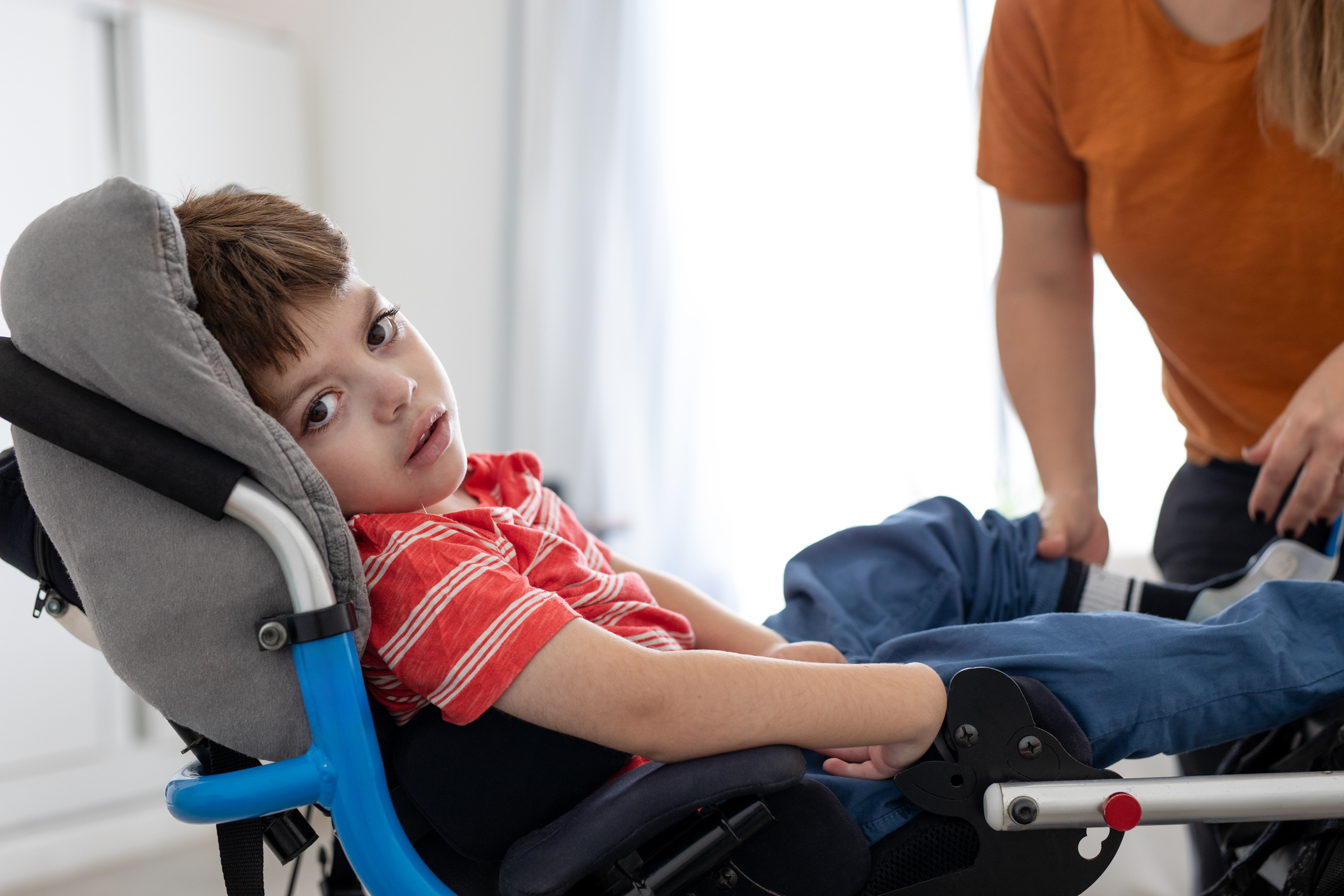
The purpose of this topic is to provide information on Motor Disabilities, including Spina Bifida and Muscular Dystrophy, in Infants and Children. This topic aims to expand the knowledge base and capacity of pre-professionals, educators, and service providers. The Motor Disability topic includes the following materials: (a) syllabus, (b) professional development guide (slide deck),
Objective
As a result of active participation and successful engagement with this topic, students will be able to:
- Describe the genetics of imprinting disorders.
- Identify the etiological causes of Prader-Willi and Angelman syndromes.
- Provide an overview of Prader-Willi syndrome and Angelman syndrome and including diagnosis, primary features, and co-occurring for each condition.
- Compare and contrast the similarities and differences between PWS and AS.
- Identify early signs of each disorder and how they are diagnosed.
- Identify the roles and services of direct support professionals, early intervention specialists, and special education teachers.
- Describe current evidence-based interventions and emerging treatments for each condition. Identify resources available to children with PWS and AS, as well as their families and care providers.
Sample Syllabus
PD Guide
PowerPoint:
Spina Bifida and Muscular Dystrophy
This presentation examines the characteristics, causes, diagnosis, and early intervention strategies for two major congenital and genetic conditions affecting infants and young children. It explains how spina bifida, a neural tube defect, develops when the spinal column fails to close properly, outlining its three main types—occulta, meningocele, and myelomeningocele—and the genetic, nutritional, and environmental risk factors involved. The presentation also explores muscular dystrophy, particularly Duchenne and congenital forms, describing its genetic origins, progressive muscle weakness, and stages of physical decline. Learners engage in diagnostic simulations, role-play activities, and family-centered planning to connect medical information with early childhood intervention practices. Emphasizing interdisciplinary teamwork, rehabilitation, and inclusive education, the module highlights how coordinated supports from educators, therapists, and families improve outcomes for children with physical disabilities.
Case Study
Case Study: Spina Bifida (Myelomeningocele)
Liam is a 4.5-year-old boy with Spina Bifida (Myelomeningocele) resulting in lower-limb paralysis, medical complexity (VP shunt, neurogenic bladder), and significant gross- and fine-motor delays — though his communication, social-emotional, and cognitive skills are largely age-appropriate. Follow Liam and his family as they navigate neonatal surgery, early intervention, assistive-technology provision, IFSP planning, and his transition into an inclusive preschool setting with mobility supports.
Learning Activities
Multimedia Illustrations
- Title with a description
- Link to video
- Suggested citation
- Length of the video
- EI/ECSE standard
- DEC Recommended Practice
Resources
Resources to supplement the syllabus:
- Muscular Dystrophy Association
- Parent Project Muscular Dystrophy
- Muscular Dystrophy Family Foundation
- Muscular Dystrophy Information Page
Webinars
- Muscular Dystrophy Association webinars:
- Physical Therapy and Muscular Dystrophy
- Center for Parent Information and Resources
- Spina Bifida Resource Network
- Spina Bifida Association
- Spina bifida (myelomeningocele, meningocele, occulta)- causes, symptoms, treatment
- Mayo Clinic
- Centers for Disease Control and Prevention: Spina Bifida
Learning Modules
• Assistive Technology
• Related Services: Common Supports for Children with Disabilities